

More on growth curves
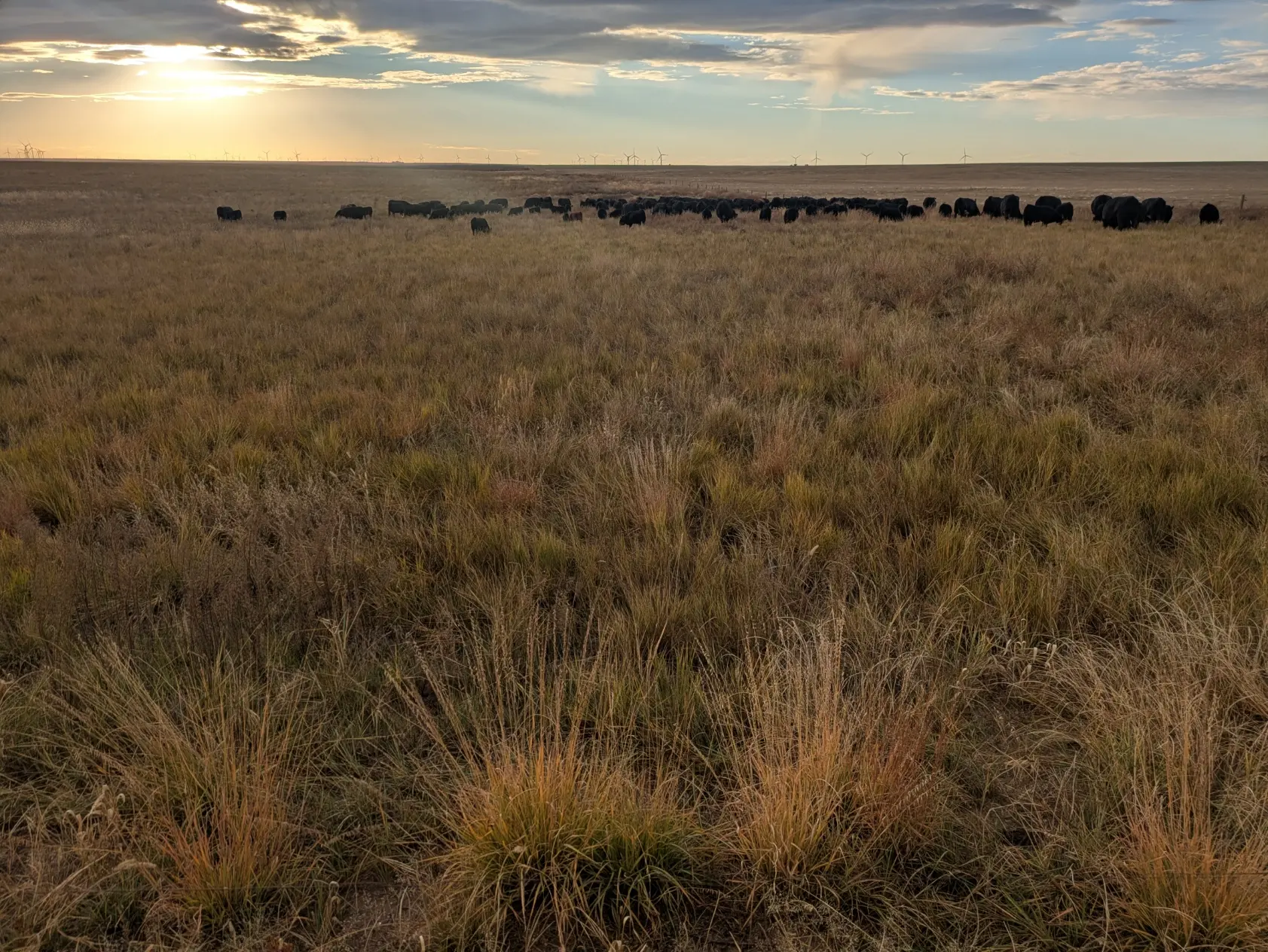
So the cows are moved and the rye is planted. And the bow on top is a half inch rain forecasted this weekend...perhaps just like the last 1" forecasted rain that produced 1/10".
Quick review of the strategy here. As discussed, we're taking advantage of the cool vs warm season growth curves to sneak in a cool season crop.
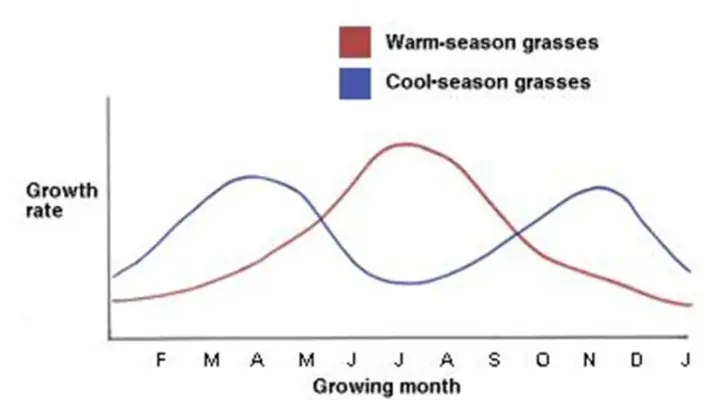
Draw a line between the O(ctober) and the N(ovember) for our October 21 planting date, and warm-season species should be well on their way to winter dormancy while the cool-seasons would be firing up had the cows not removed their solar panels. As such, the grazing hopefully will have little adverse effect on the former while inhibiting the latter.
This notion is very relevant in light of multiple cheatgrass projects I've seen in recent years. The thought process (or sales pitch) being that cheatgrass is invasive. I won't delve into a debate on what "invasive" may or may not mean right now - I'll just say that I define it as a species without ecological checks, thereby requiring equipment, chemicals, or some other intervention. I contend that cheatgrass does not necessarily fit this definition, especially in my area. Although, areas such as Great Basin where cheatgrass dramatically affects burn intervals are a different story.
In my area, most cheatgrass is caused by grazing management, and can be addressed by grazing management. I've been told that cheatgrass soils are too sandy and fragile for range management, but I bet there's a lot of ranchers in western Nebraska who'd take exception to that.
We've been through this with tebuthiuron in cedars, picloram on cactus, and now indaziflam on cheatgrass. I'm not categorically opposed to the chemicals, so long as the underlying management that fomented the situation in the first place is acknowledged and addressed. Otherwise you just end up back where you started, often at additional taxpayer expense.
Quick example, we have a sandy bottomland pasture that had been predominately cheatgrass and needleandthread. The pasture is our furthest east, funny shaped, with a creek through the middle, and was treated as something of an afterthought with smaller groups thrown in opportunistically. 3 years ago, I decided to really try to make better use of the area knowing that a sandy bottomland ecosite was capable of much better forage, and starting hammering the pasture with big numbers early to clean the cheatgrass and N&T out before they produced awns, and then deferring the rest of the summer so warm-seasons could do as they pleased. Most of the area is now blue grama, with pockets of taller grasses - sandreed, Indiangrass, big blue, and switch. Things can improve quickly if you just stop digging your hole deeper.
Besides, green cheatgrass tends to be highly palatable, high protein forage. Spraying it with herbicide when you have the ability to utilize it while also addressing the annual grass concern misses the point and wastes money.
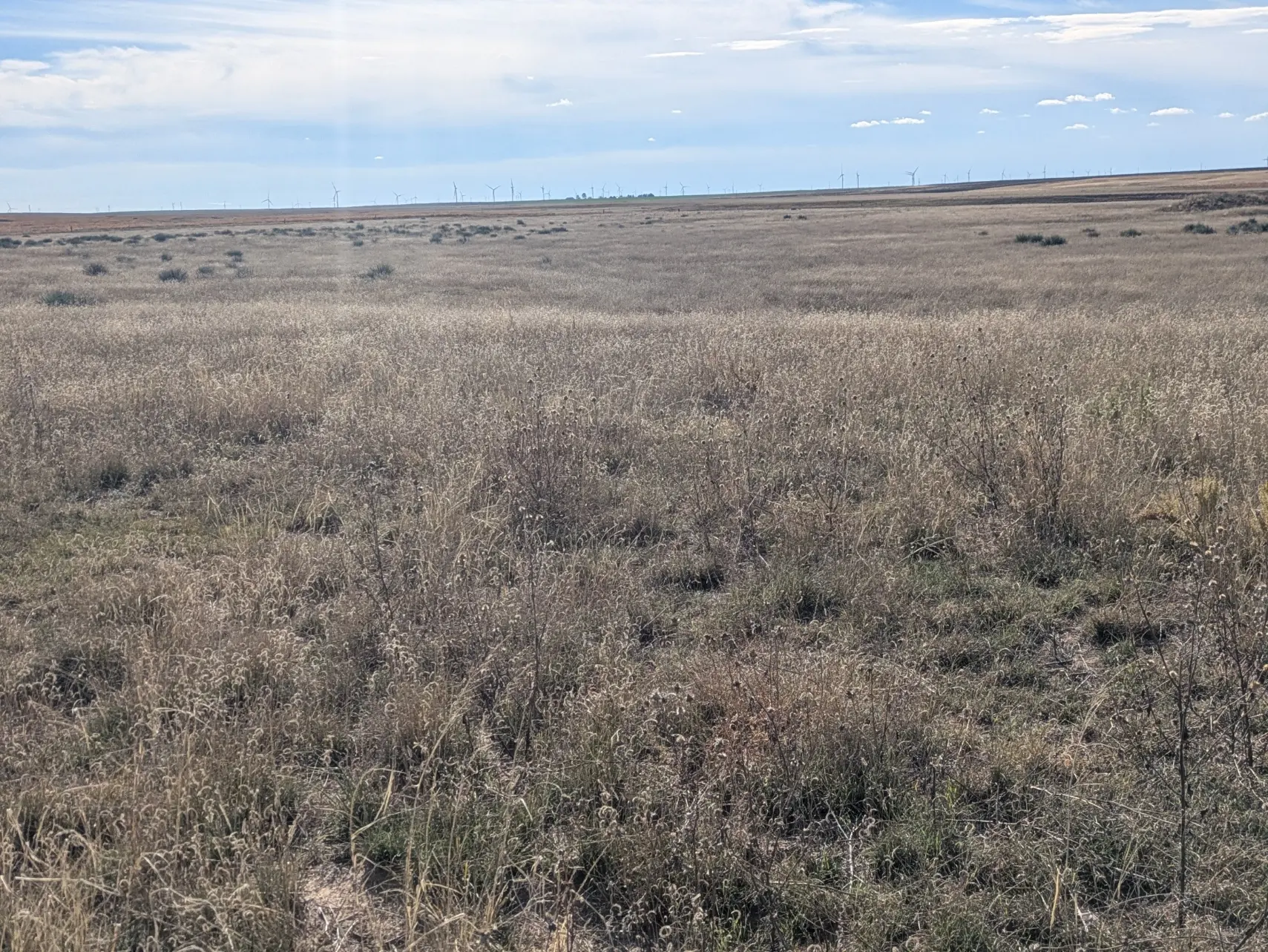
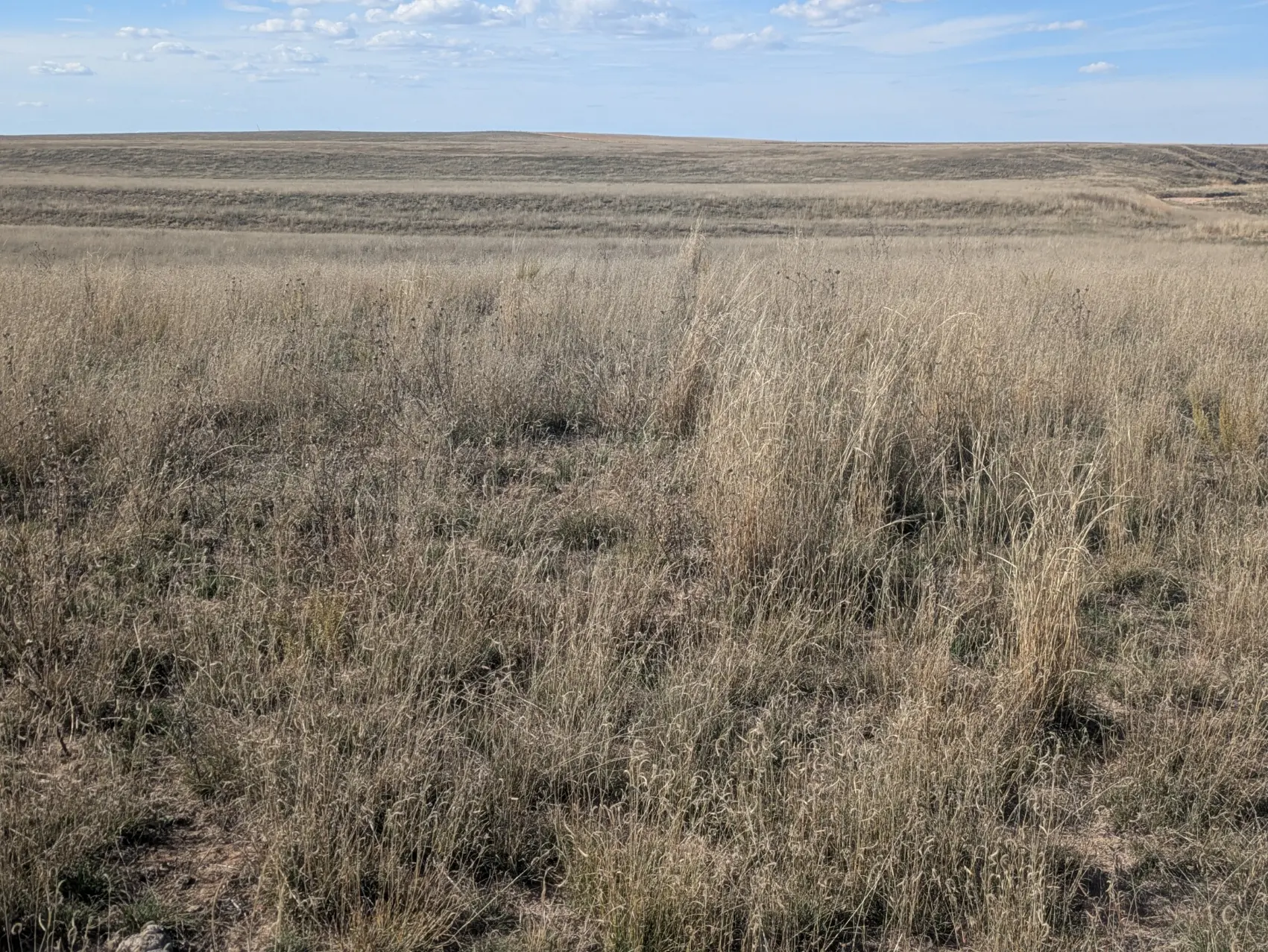
Quick planting recap
I'll get off my soapbox long enough to climb in the tractor cab...
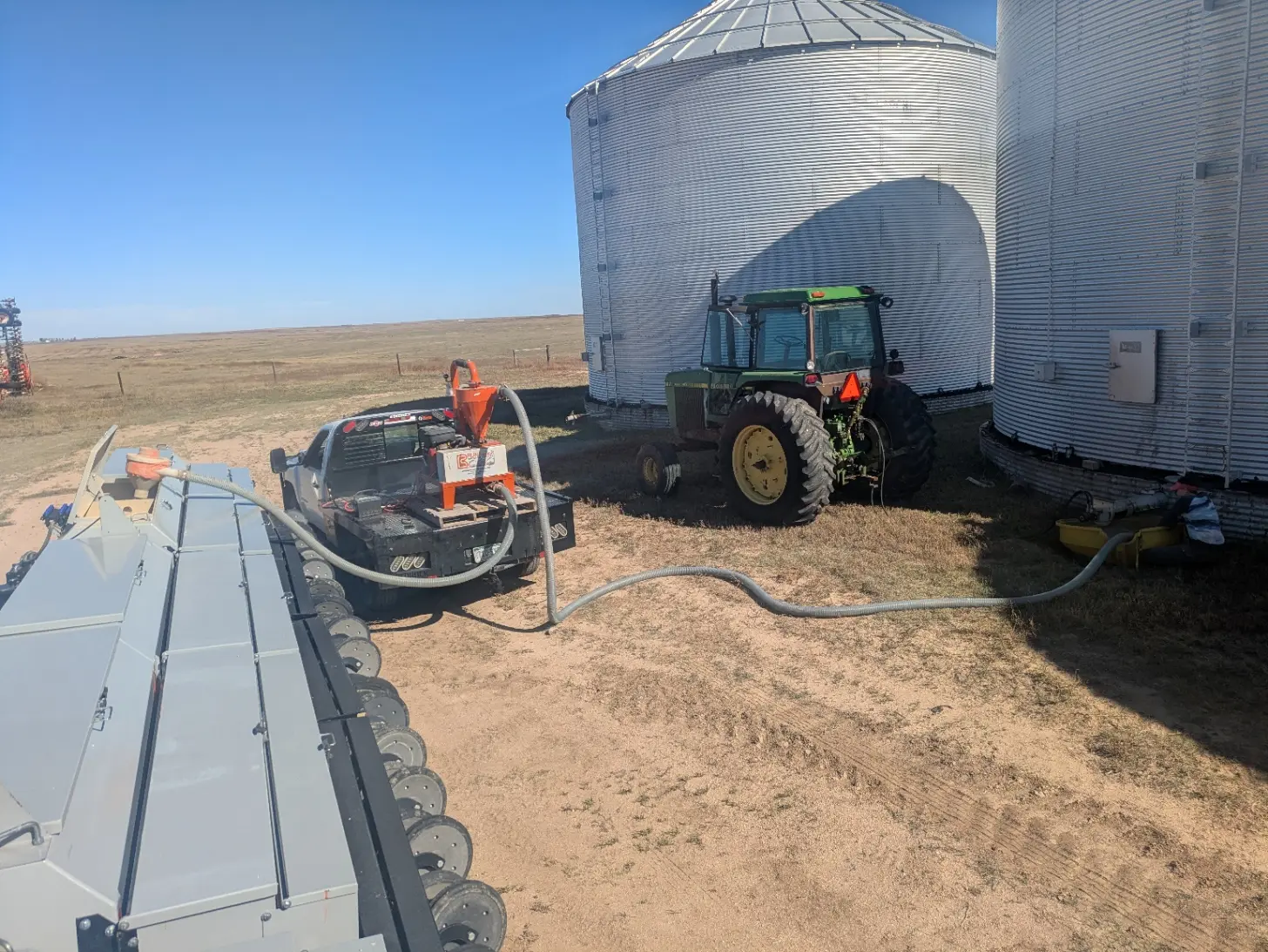
I've been spoiled by the Bourgault so It's been 2 years since I've used the box drill. The Crustbuster is very versatile, but adjusting rates and depth is tedious. Luckily, Danko was the last thing I used it for in 2024, so things were pretty much ready to go.
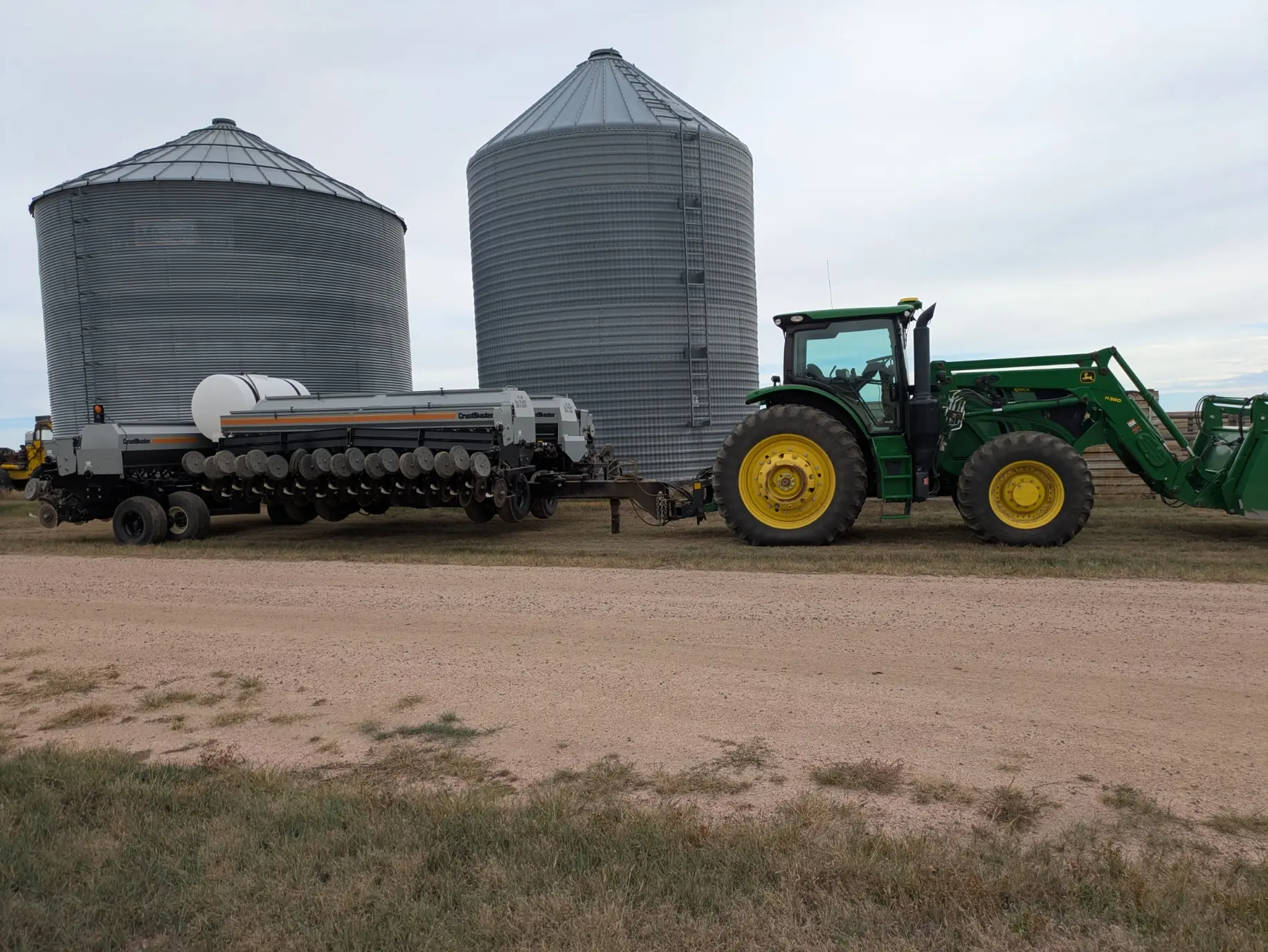
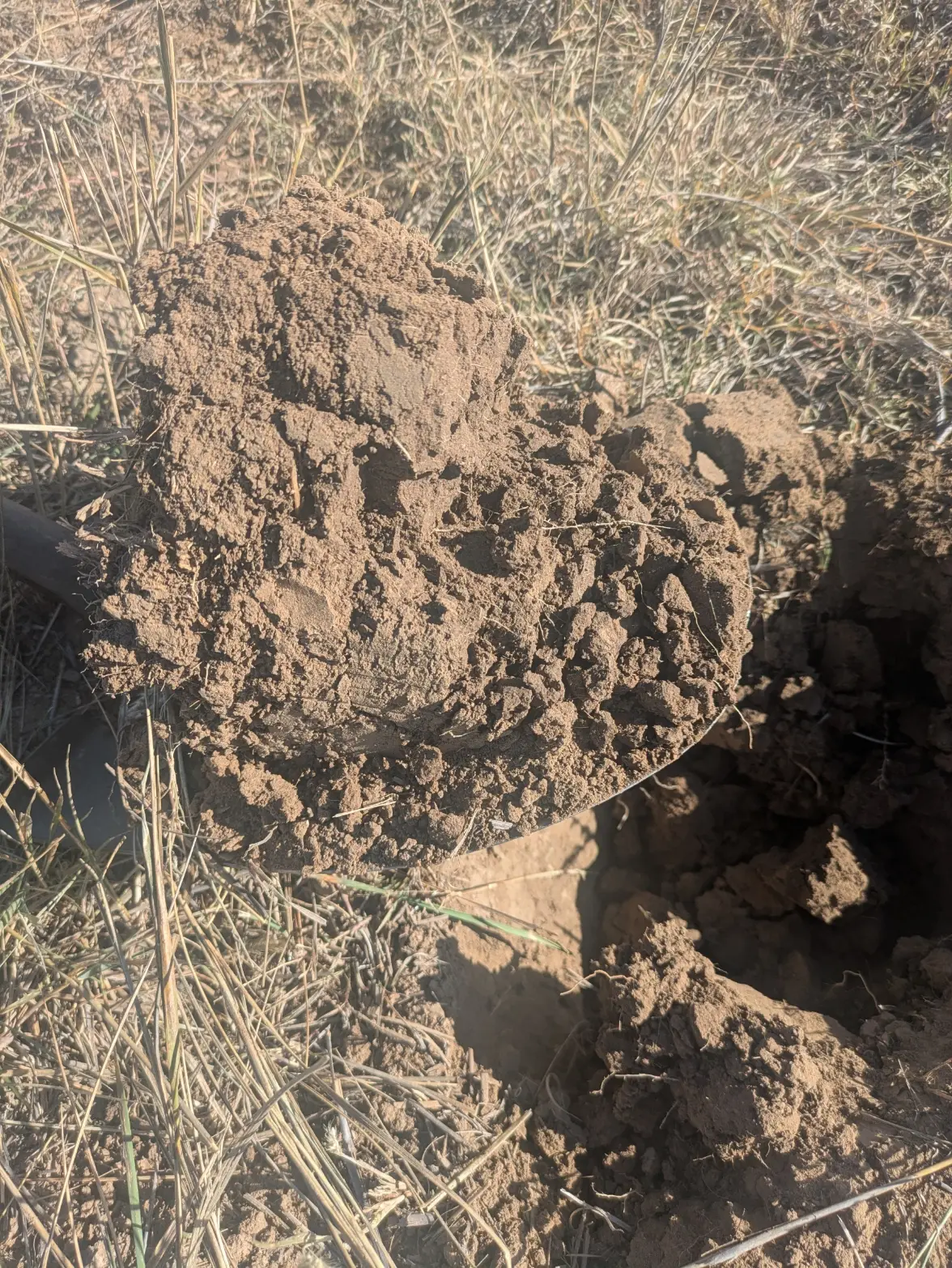
Fallow as fall planting prep assumes you will "bank" summer moisture for use in the fall by minimizing transpiration losses through living plants. That is anathema to soil health principles, and the complete opposite of this pasture crop approach, so I dug some holes to see what I'm working with, and how to set the drill.
The ground is quite dry despite decent moisture. I wouldn't say bone dry, but definitely won't be immediately getting any crops up. Part of this issue is the soil distinctly shows the plow pan and hard blocky structure, very likely hurting infiltration. I was shocked how hard some areas were, so it may be yet another waiting game for soil to improve under different management and fortuitous weather.
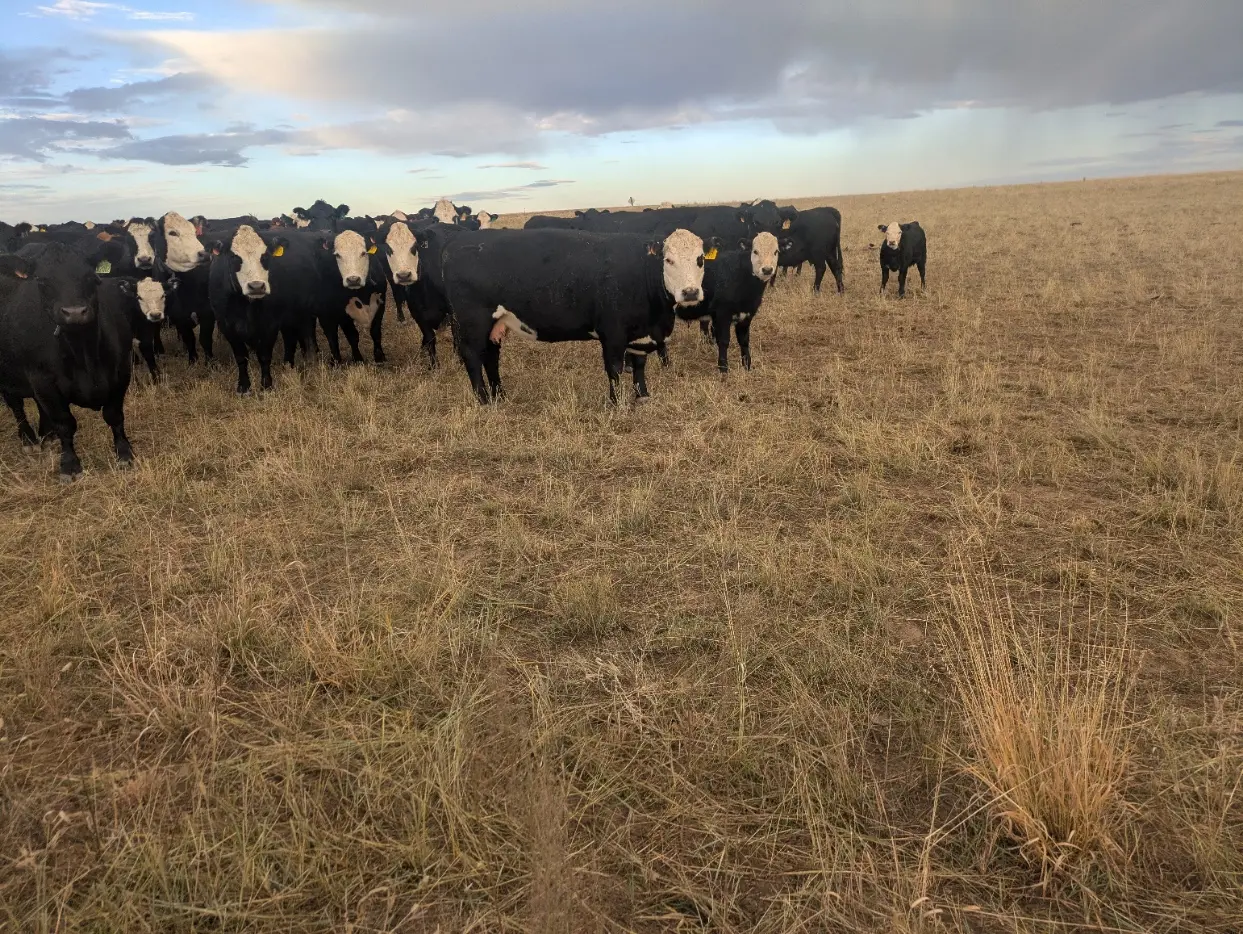
I was planning to leave the cows for one more night, but they met me at the corner with much ado. The drill was ready, so I dropped a couple wires and they crossed the road.
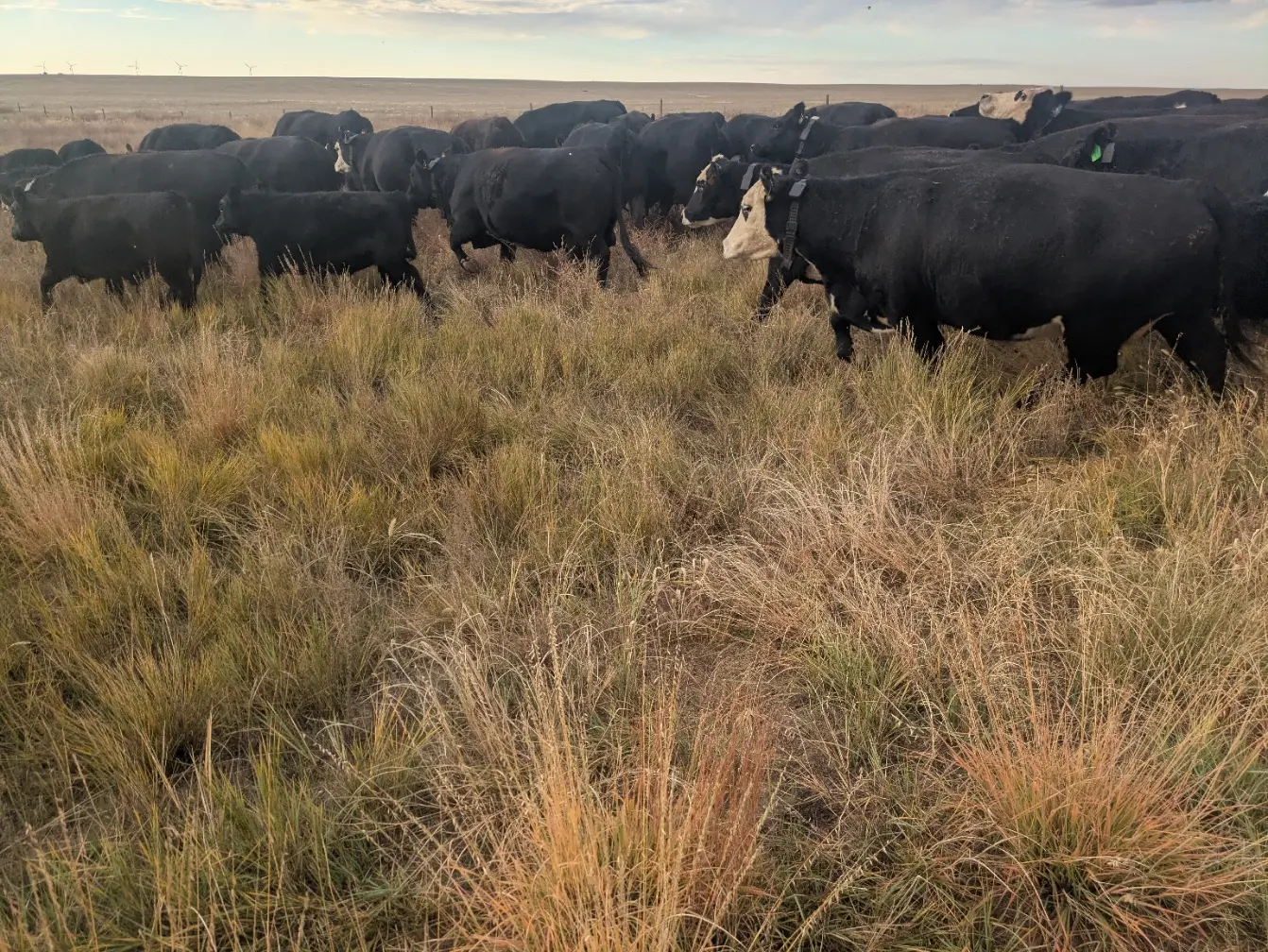
Given hard, dry ground but rain forecasted, I set the drill at maximum down pressure and minimum depth, ~3/4". The native stand is starting out as cool-season dominant (western wheatgrass) so I'm already swimming upstream and a bit concerned if this rye doesn't come on immediately, the wheatgrass will rebound and smother. Maybe an intensive graze could remedy that, but the cows are headed back west to HQ for the winter soon.
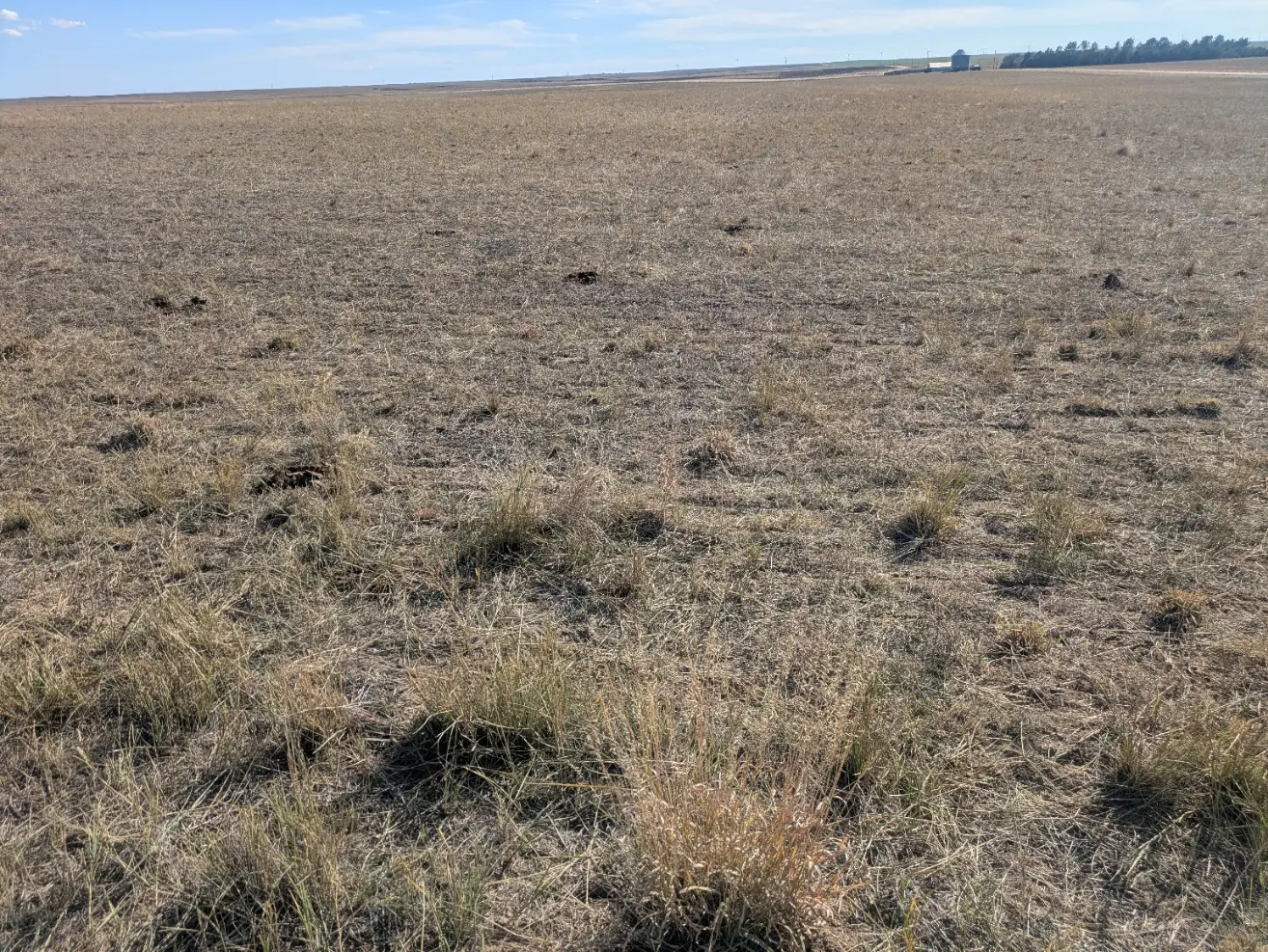
If we indeed get nice rain this weekend, this should be interesting. If not...could still be interesting